WorkBuddy vs Claude for Malaysian teams
WorkBuddy vs Claude comes down to who is driving. Claude is a developer-first assistant, known for careful writing and long-document reasoning, and its Claude Code tool is built for people who live in a terminal. WorkBuddy is a business agent built for people who live in documents — it plans tasks, works your files, and returns finished deliverables, with a free plan you can start on today.
The short version: if your team writes software, Claude earns its place. If your team produces reports, quotes and decks, WorkBuddy does. The two are not rivals so much as different desks.
The comparison, for a Malaysian buyer
| Question | WorkBuddy | Claude |
|---|---|---|
| Who is it built for | Business users producing documents | Developers, analysts and technical writers |
| Signature strength | Finishing multi-step deliverables on your desktop | Code, long-document reasoning, precise writing |
| How you start | Free plan, 100 credits/month, no card | Free to try; paid plans set by Anthropic |
| Entry point | Desktop app on your files | Web, app and Claude Code in the terminal |
| Best task | "Produce the pack from these files" | "Refactor this code" or "reason across this report" |
| Weakness to plan around | Less specialised for deep coding work | Not built around producing business files for you |
The rows that decide it are the first and fifth. Claude shines when the work is technical and the user is technical. WorkBuddy shines when the output is a document and the user is not.
Where each one wins
Where Claude is the stronger choice
Claude is the better pick for software work. Claude Code is aimed at developers who want an assistant inside their coding workflow, and Claude handles long, dense documents — contracts, research papers, technical specs — with a care that suits analytical work. If your day ends in a commit, Claude is closer to your desk.
Where WorkBuddy earns its place
WorkBuddy is built for the team that ends the day with a file for someone else: a quote for a client, a board summary, a formatted spreadsheet, a slide outline. It works in folders you authorise, so it reads the source files and writes the result without you pasting content into a chat box.
A developer and a distributor, side by side
Picture a Shah Alam software house and the electronics distributor it supplies. The software house uses Claude to review code and tighten documentation — the assistant lives where the work does. The distributor has no developers; it uses WorkBuddy to turn a folder of supplier quotes into a comparison sheet and a client proposal.
Cost shape, not price tags
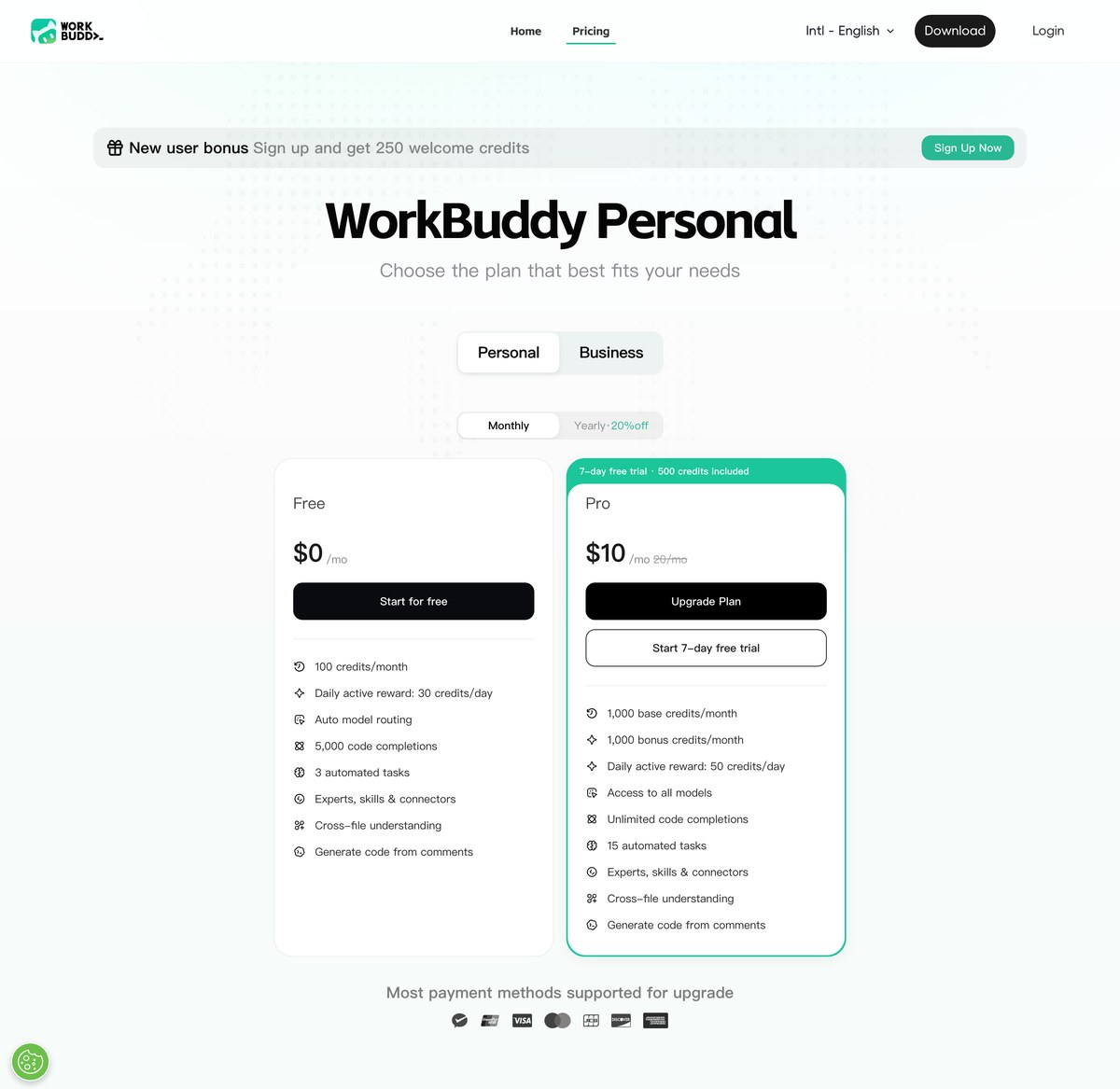
The billing models feel different. Claude is priced by Anthropic for developer-heavy use, which suits teams whose work is technical. WorkBuddy meters work in credits and hands you a free monthly allowance of 100 plus a daily reward, so the entry cost is zero. For a Malaysian SME testing its footing, starting free is the lower-risk path — see what each plan costs and how the free credits work before you commit.
Which one for whom
Reach for Claude if…
You write software, or you reason across long technical documents all day.
Reach for WorkBuddy if…
You produce business deliverables — quotes, reports, decks, sheets — inside folders on your own machine, and you want to start free.
For the wider field, see WorkBuddy vs ChatGPT and WorkBuddy vs Gemini, browse the agentic use cases, or try WorkBuddy free and judge on your own files.
Common questions
Is WorkBuddy a replacement for Claude?
No. Claude is developer-first, aimed at code and long-document reasoning; WorkBuddy is a business agent that finishes deliverables inside folders you authorise. A software team may want both, and a non-technical SME will usually get more from WorkBuddy.
Who makes Claude, and who makes WorkBuddy?
Claude is Anthropic's product. WorkBuddy is a Tencent product, used in Malaysia on the international edition. BigDomain is an official Tencent Cloud agentic-cloud partner and runs this independent guide.
Which should a non-technical Malaysian SME choose?
WorkBuddy, in most cases. Its strength is turning a folder of local files into a finished document — a quote, a proposal, a spreadsheet — and it starts on a free plan with 100 credits a month and no credit card.
Can I run Claude for code and WorkBuddy for business work?
Yes. They rarely overlap: Claude suits the coding workflow and technical reasoning, while WorkBuddy suits document production on your desktop. Many teams keep both and use each where it fits.
Next step
If your work ends in a document rather than a commit, test WorkBuddy on one real job before you decide.